Facility-led and seasonal
- Budget-conscious venue shoppers
- Commoditized room or facility rental
- Competitive market-rate venue fees
- Marketing centered on facility maintenance and upgrades
Flagship Income Series · CR-1
Camden Ranch operations, private-estate transition, revenue engines, pipeline and forward-looking scenarios.
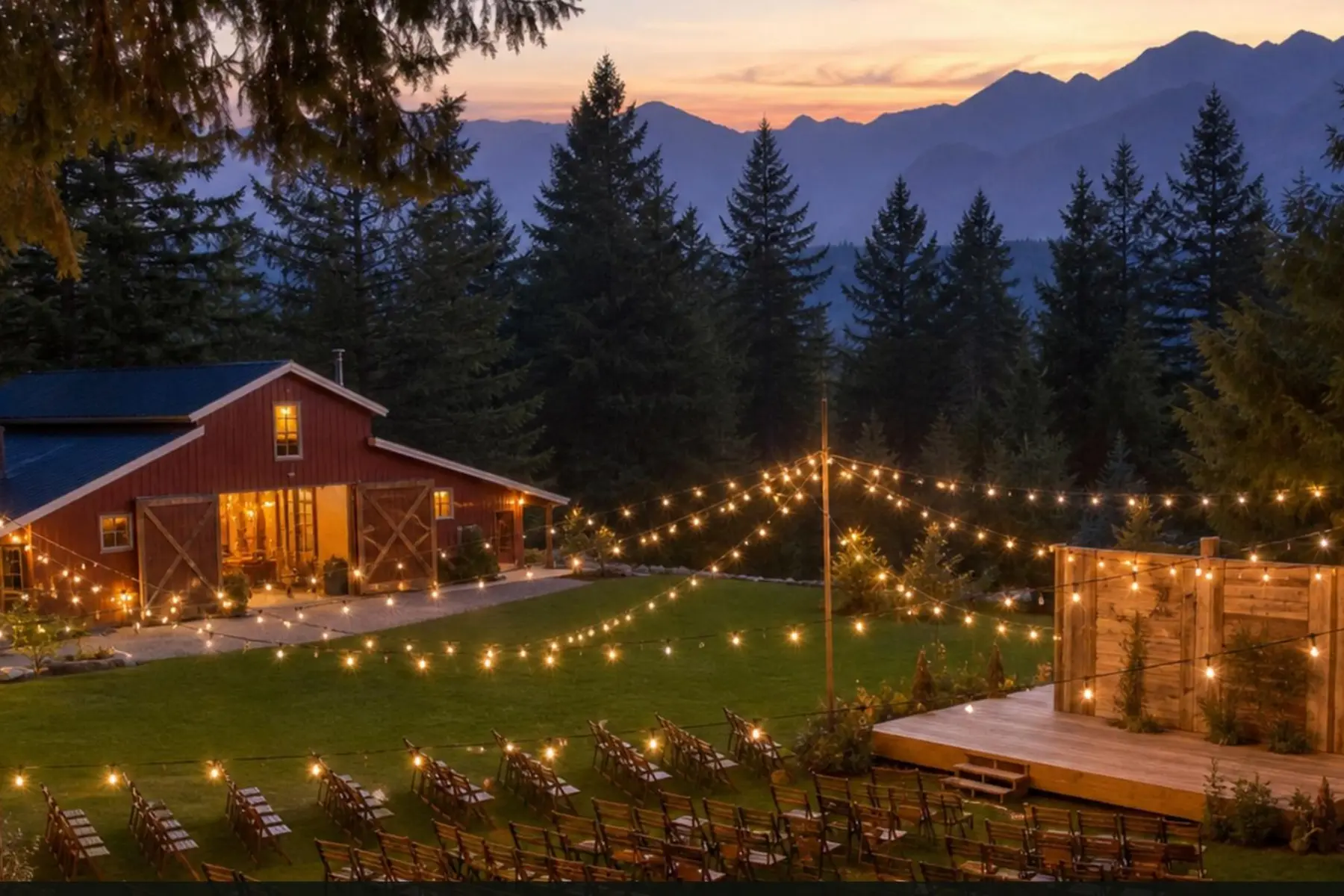
Property profile
Camden Ranch is positioned within reach of Spokane and the Coeur d’Alene luxury market, creating access to wedding, corporate and estate clients seeking privacy and multi-day use.
2026 booking pipeline
The pipeline includes 41 confirmed paid wedding bookings and 10 scheduled bookings, providing an operating base for the transition-year strategy.
The strategic reframe
The plan preserves the current wedding operation while expanding the calendar, client base and revenue model toward a Forbes-caliber destination.
Multi-engine revenue architecture
Photographer days, bridal fashion shows and beauty launches are projected to generate $43,000–$179,000 in annual direct event revenue. The vendor program uses 8% Network, 10% Partner and 12% Ambassador commissions, with a 5% couple discount supporting attribution. Planning accounts for an approximately 15% total referral cost to the ranch.
The CRM monitors 79 target companies: 41 in the Spokane market and 38 in Coeur d’Alene. Spokane is positioned as a no-travel-day alternative approximately 30 minutes from downtown for firms such as STCU, Washington Trust and Schweitzer Engineering Laboratories. Coeur d’Alene is positioned as an exclusivity-focused alternative within approximately 60 minutes for firms such as Mercer, Morgan Stanley, Hagadone Corporation and Kootenai Health. Travel times vary by route and starting point. Targets are not contracted customers or revenue.
The planned ELD program includes a Ground Initiative Course with 15–20 challenge stations and a debrief pavilion, a Fireside Leadership Center with an all-weather structure and permanent fire circle, and a certified instructor-led firewalk program. Specialized permitting and insurance are included in the planning assumptions, but final permitting, coverage, design, cost and construction remain subject to confirmation and approval.
Development and permitting thesis
Pend Oreille County is identified as a material development advantage for CR-1. Compared with the more restrictive Spokane County environment, the current plan anticipates a more workable permitting pathway for accessory dwelling units and tiny homes.
A more workable approval environment may reduce compliance burden, lower certain development costs and decrease construction-timeline risk for the lodging expansion and Phase 2 preparation.
This is a planning thesis—not a permit approval or guarantee. Current county requirements, utilities, land-use rules, insurance, engineering, environmental conditions and the final site plan must be confirmed before construction or investor reliance.
Forward-looking operating scenarios
The scenarios model the transition from a legacy wedding venue to an expanded, year-round private estate. Upon completion of all infrastructure phases, the full-scale operational target is more than $1.8 million in annual revenue.
| Scenario | Weddings | Corporate / ELD | Holiday / Other | Total annual |
|---|---|---|---|---|
| Conservative · Year 1 | $200,000 | $120,000 | $60,000 | $380,000 |
| Moderate · Year 2 | $400,000 | $280,000 | $120,000 | $800,000 |
| Aggressive · Year 3 | $700,000 | $550,000 | $200,000 | $1,450,000 |
These figures are forward-looking estimates, not historical results, valuations, guarantees or promises of investor distributions. Actual results may differ materially because of demand, pricing, construction, permitting, inflation, operating costs, insurance, staffing, competition and other risks.
Continue the CR-1 review